
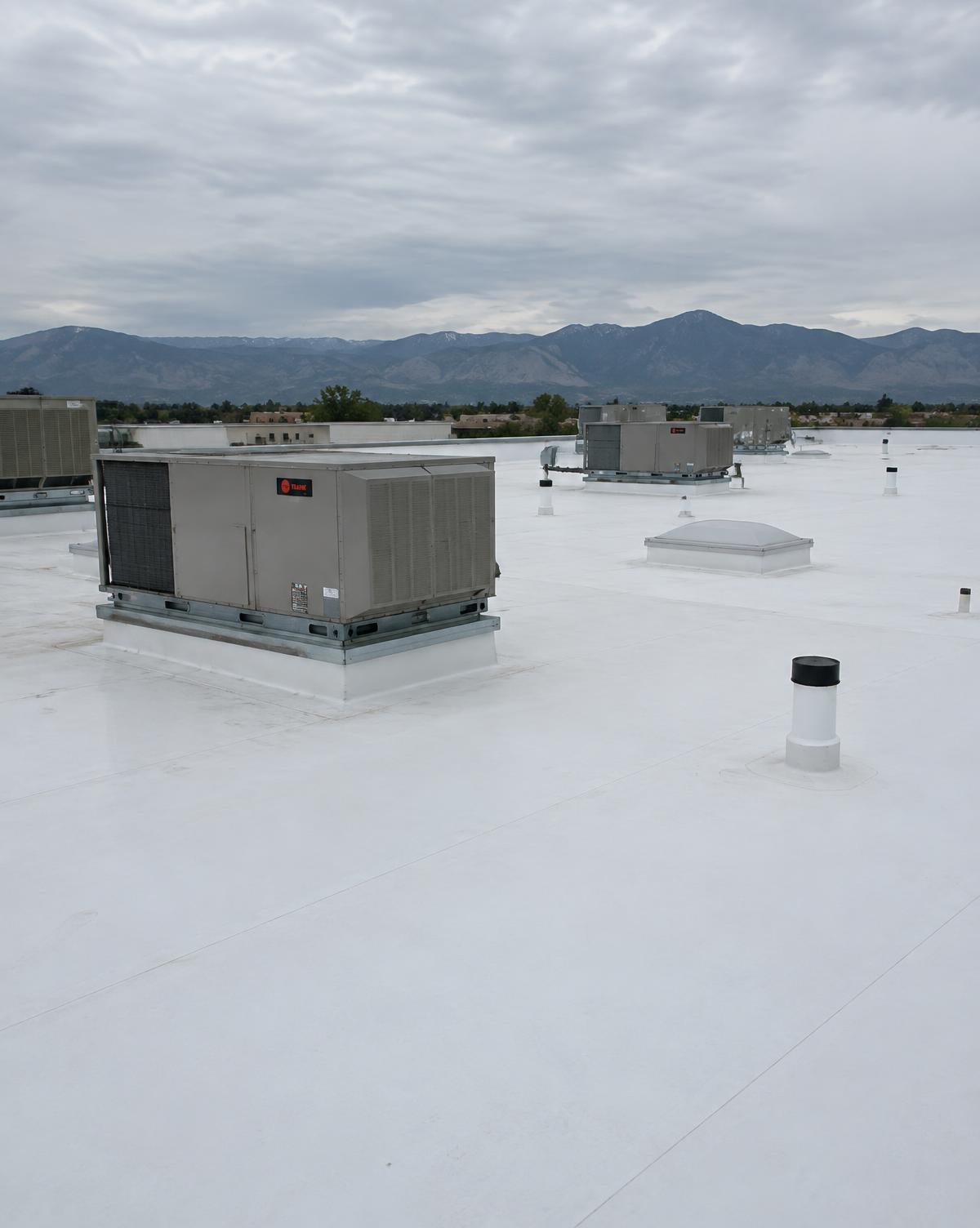
Commercial Membrane Roofs
Restore the flat roof. Skip the tear off.
Coating systems for TPO, PVC, EPDM, modified bitumen, and built up roofs on commercial buildings across the Mountain West.
Flat roof restoration
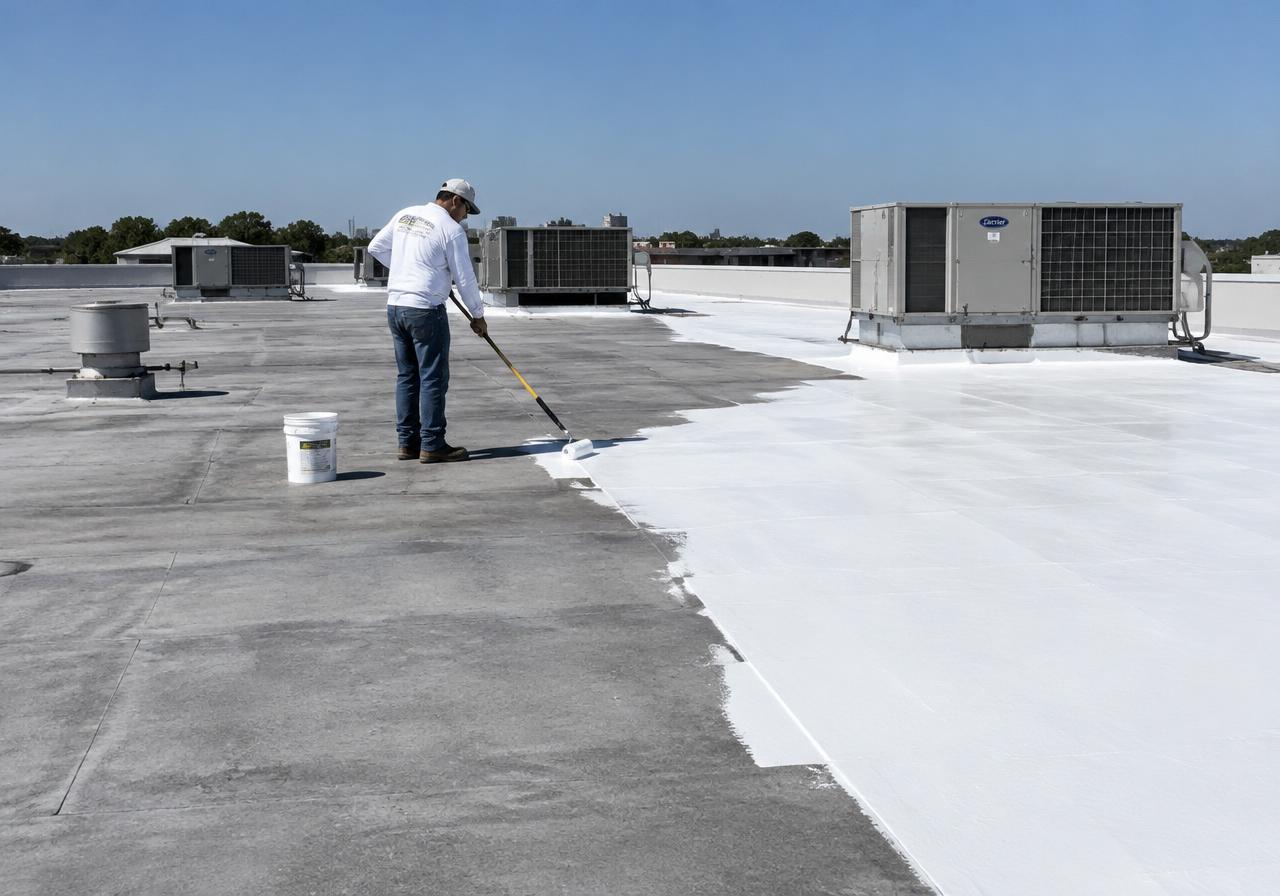
Flat and low slope roofs take a beating in the Mountain West: UV at elevation, freeze thaw cycles, snow load, and standing water. Over time membranes shrink, seams open, and the surface cracks. If the roof is still mostly dry underneath, a full tear off usually isn't necessary. We find and replace any wet areas, repair the seams and penetrations, and apply a seamless coating over the entire roof. It's a new, continuous waterproof surface at a fraction of the cost and disruption of a replacement. Metal building? See commercial metal roof coatings.
Problems we fix
- Open or failing seams
- Cracking, crazing, and weathered surfaces
- Membrane shrinkage pulling at the edges
- Blisters and ponding areas
- Leaks at drains, curbs, and HVAC units
Systems we coat
- TPO and PVC
- EPDM (black rubber)
- Modified bitumen
- Built up (tar and gravel, after prep)
- Spray foam roofs
The process
- 01
Moisture survey
We scan the roof to find trapped moisture so wet insulation doesn't get sealed in.
- 02
Repair
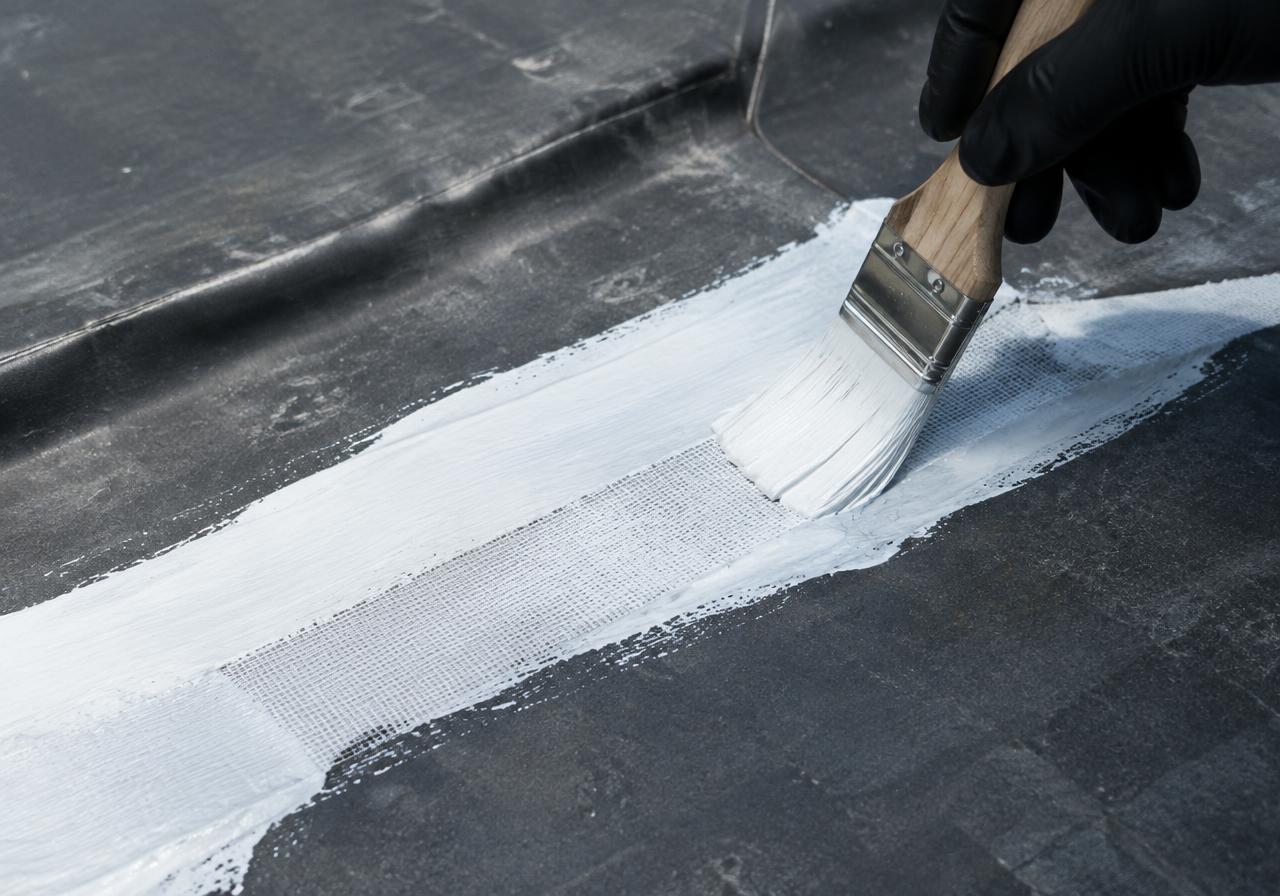
Wet areas are cut out and replaced. Seams, drains, and penetrations are reinforced.
- 03
Clean & prime
The membrane is cleaned and primed so the coating bonds properly.
- 04
Coat
A seamless coating goes over the entire roof at the specified thickness.
Membrane coating vs. tear off
Protect what you have
Roof coating
Cost per sq ft
$[X]
Business downtime
Minimal
Tear off & landfill waste
Little to none
Time to complete
Days
Surface reflectivity
High (white coatings)
Start over
Tear off
Cost per sq ft
$[X]
Business downtime
Often significant
Tear off & landfill waste
Full tear off
Time to complete
Weeks
Surface reflectivity
Varies
Every roof is different / Final recommendation after inspection
Flat roof coating guide
Coating TPO, EPDM, and modified bitumen roofs
Single ply and built up flat roofs wear out from the top down. UV breaks down the surface, seams start to separate, and flashing around curbs and drains pulls loose. In many cases the insulation and deck below are still dry and sound, which means the roof can be restored with a fluid applied coating instead of torn off.
Coatings are available for TPO, PVC, EPDM, modified bitumen, and built up roofs. Each membrane type needs the right cleaner and primer so the coating bonds properly, which is why a site specific assessment comes first.
Ponding water and seams
Water that sits on a flat roof for more than a couple of days after a storm is called ponding. It speeds up wear and finds any weak seam. For roofs with ponding areas, silicone coatings are often the better choice because they hold up to standing water better than many acrylics.
Open or cracking seams are reinforced with fabric and seam sealer before coating so the finished roof acts as one continuous membrane.
Checking for wet insulation
A coating should never be applied over wet insulation. Trapped moisture keeps rotting the deck and can cause blisters in the new coating. We inspect for wet areas, and saturated sections are cut out and replaced before coating.
Keeping your building open
Tear off means noise, dust, dumpsters, and an open roof. A coating is applied on top of the existing roof, so tenants, customers, and equipment stay inside and operations continue while the work is done.
Less waste in the landfill
Commercial roof tear offs send a lot of material to the landfill. Restoring the roof in place keeps the existing membrane in service and avoids most of that waste.
“A tear off throws away a roof that's mostly still working. A coating fixes what's failing and keeps the rest.”