
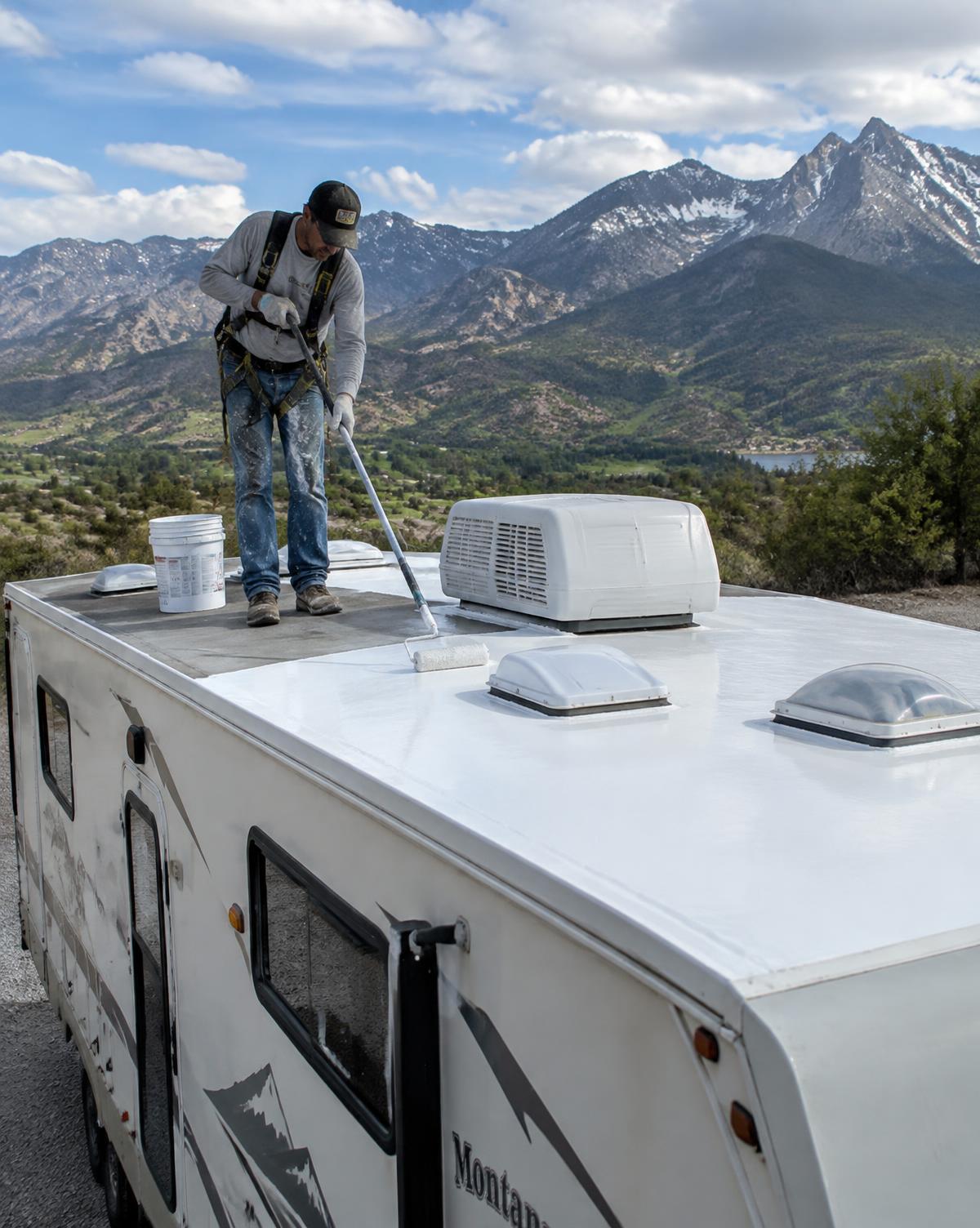
RV Roof Coatings
Seal the RV roof before it leaks.
Coating and sealing for travel trailers, fifth wheels, and motorhomes.
Protect the rig
RV roofs live outside in sun, wind, and snow, and most leaks start at the seams, vents, and AC units. By the time you see water inside, the damage is already done. We clean the roof, reseal the problem areas, and coat the whole surface to keep water out. For your home, see residential shingle roof coatings.
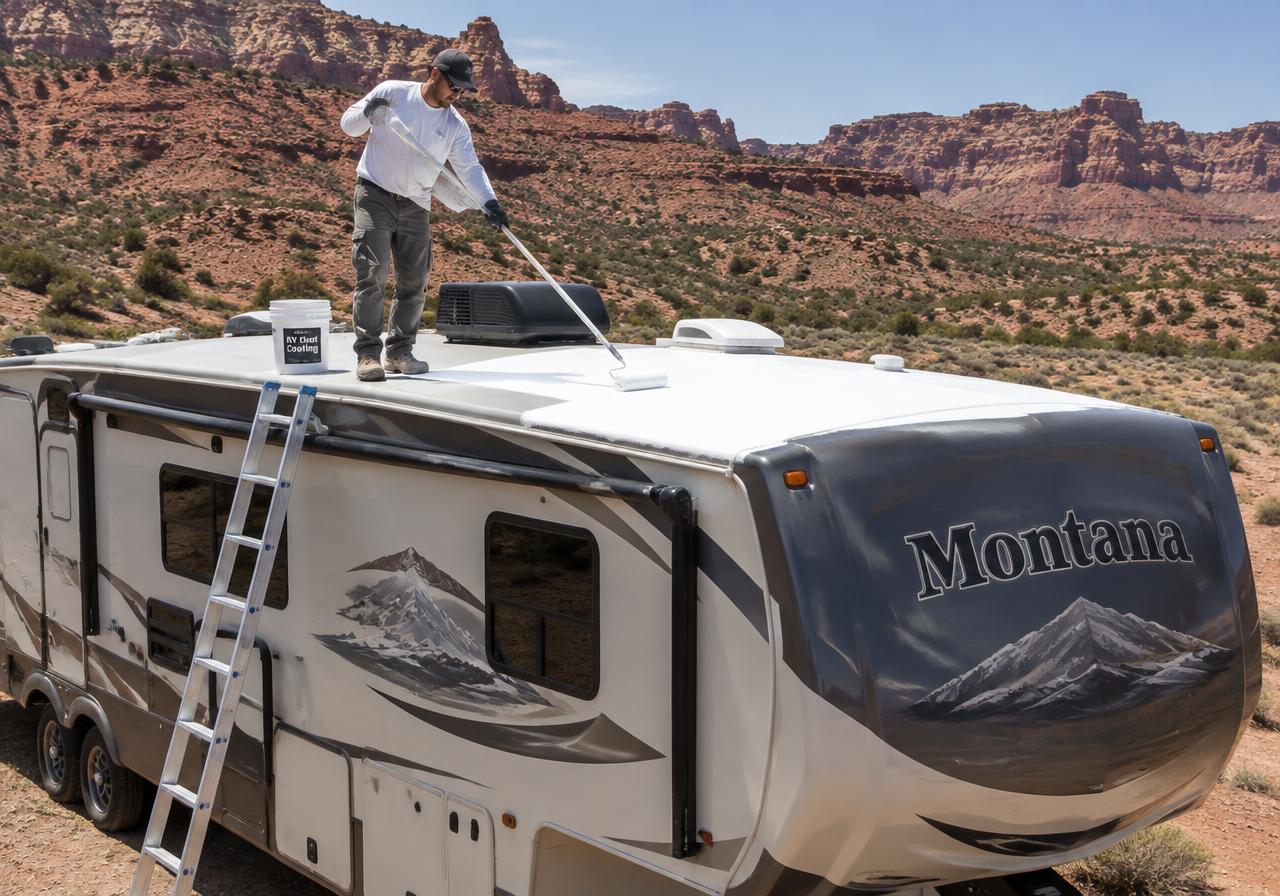
What we coat
- Rubber (EPDM or TPO) roofs
- Fiberglass roofs
- Aluminum roofs
What's included
- Roof cleaning and inspection
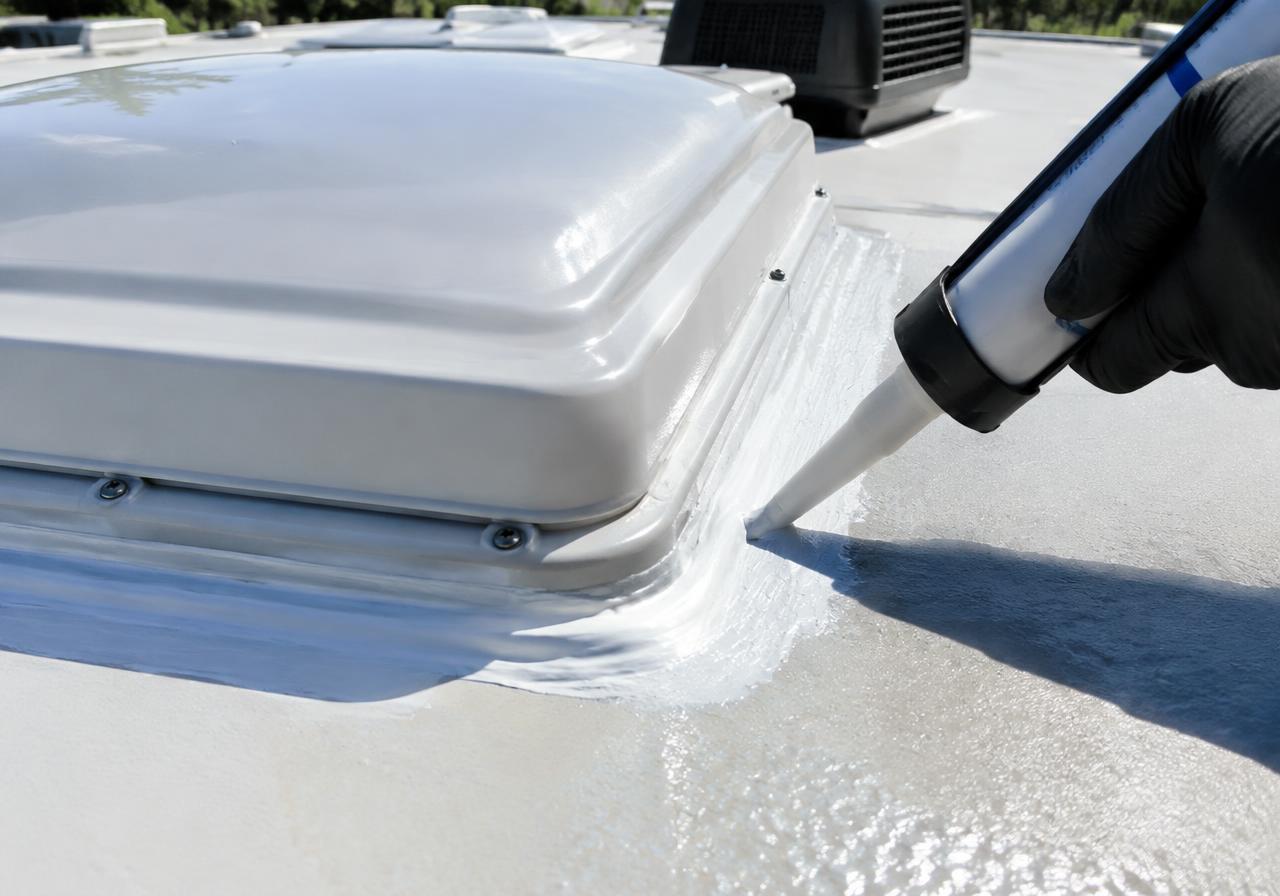
- Resealing seams, vents, and AC units
- Full roof coating
RV roof coating guide
Why RV roofs leak
RV roofs take a beating from sun, wind at highway speed, tree branches, and twisting as the coach moves. The sealant around vents, skylights, antennas, and the front and rear caps dries out and cracks. Once water gets in, it soaks into the wood and insulation in the roof and walls, and the damage spreads quietly.
Coating EPDM, TPO, and fiberglass RV roofs
Most travel trailers, fifth wheels, and motorhomes have an EPDM or TPO rubber roof, and some have fiberglass or aluminum. Each needs the right cleaner, primer, and coating. The roof is cleaned, seams and penetrations are resealed, and a coating is applied across the whole roof to protect the membrane from UV and water.
Signs your RV needs a coating
Chalky white residue on the sides of the coach, cracked sealant, soft spots on the roof, and water stains on the ceiling are all warning signs. Stains and soft spots mean water is already inside, so do not wait.
Protecting your investment
Water damage is one of the most expensive problems an RV can have, and it drags down resale value. Keeping the roof sealed and coated is inexpensive compared to rebuilding a rotted roof or wall.
Further reading