
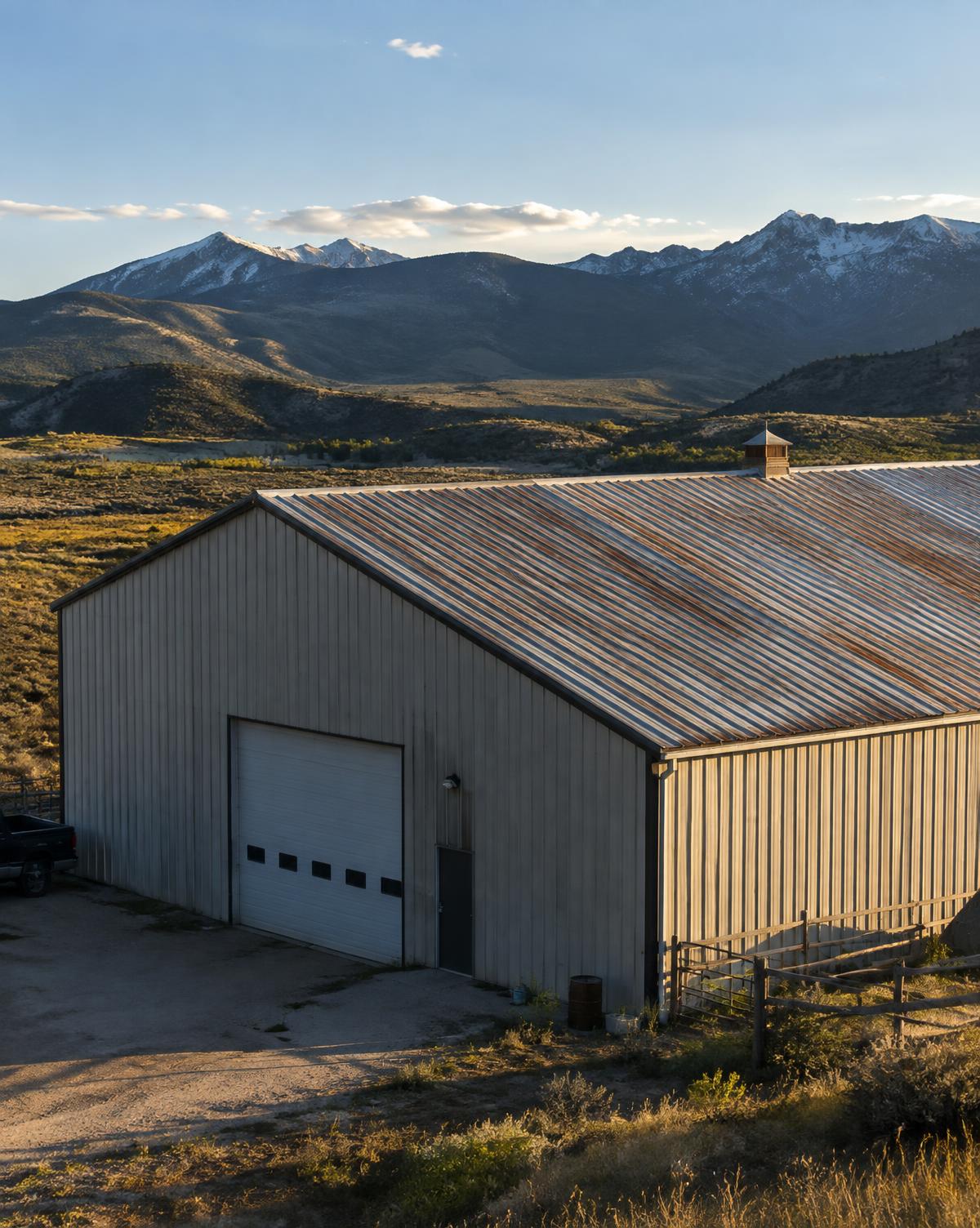
Commercial Metal Roofs
Stop the leaks. Keep the roof.
Coating systems for metal roofs on shops, warehouses, ag buildings, and commercial properties across the Mountain West.
Metal roof restoration, not replacement
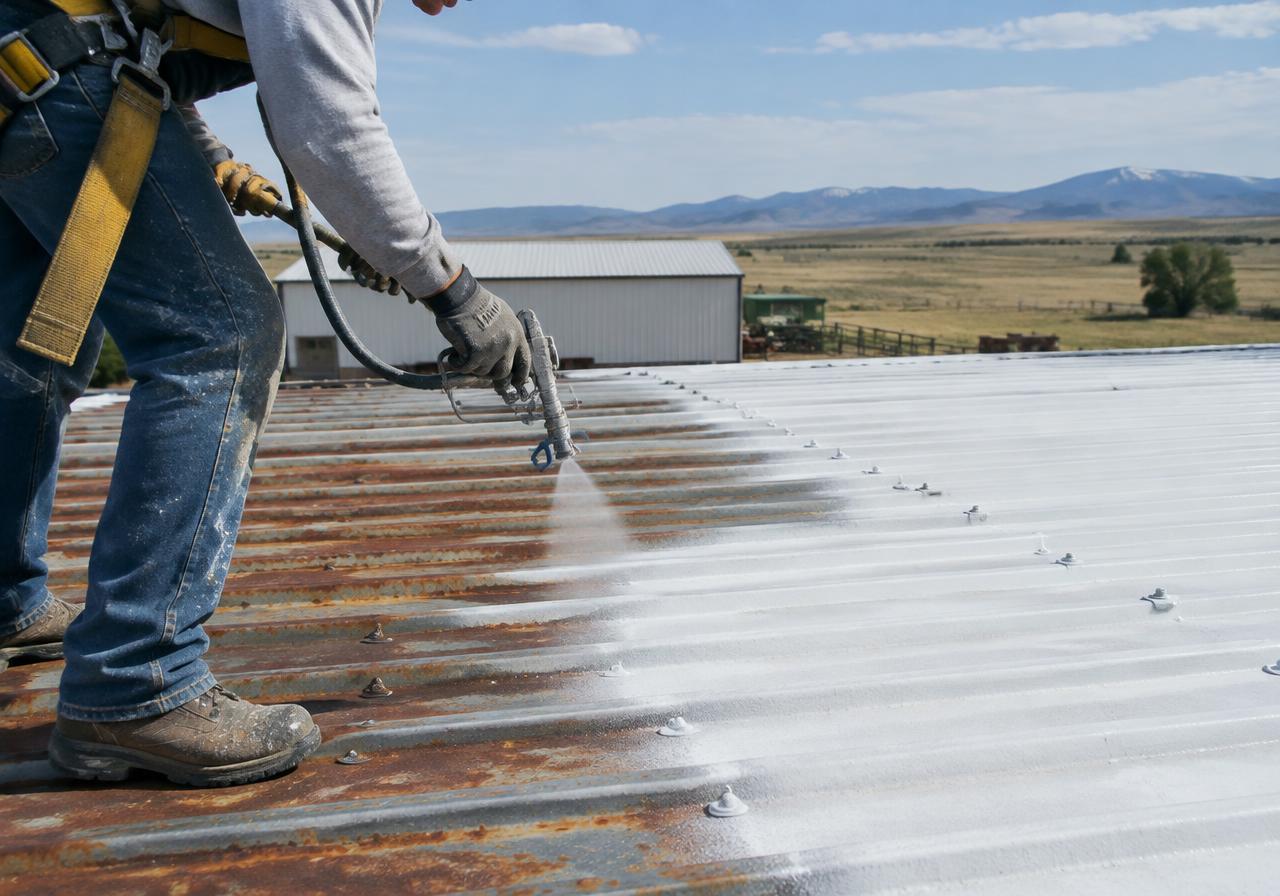
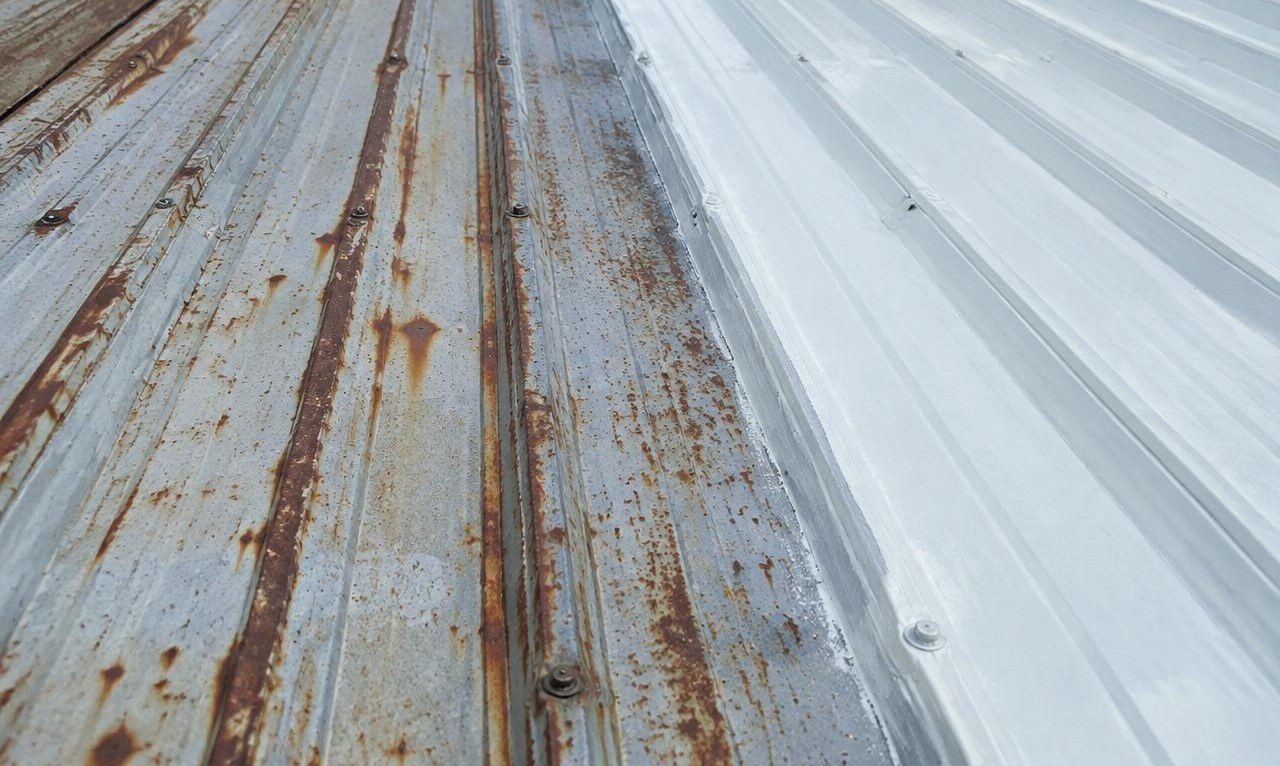
Most metal roofs don't fail all at once. The screws back out, the washers dry up, seams open, and rust starts at the laps and fasteners. The panels themselves usually have plenty of life left. A metal roof coating system seals every fastener and seam, treats the rust, and covers the whole roof in one continuous, weather tight membrane. You get a roof that stops leaking and reflects heat, without tearing off a single panel or shutting down the building. Got a flat roof too? See our commercial membrane roof coatings.
Problems we fix
- Leaking screws and fasteners
- Open seams, laps, and end joints
- Surface rust and corrosion
- Leaks around skylights, vents, and curbs
- Faded, chalky, heat absorbing panels
What's included
- Full roof assessment and photo report
- Power washing and rust treatment
- Fastener sealing or replacement
- Seam and penetration reinforcement
- Elastomeric coating applied to spec
- Written warranty
The process
- 01
Assessment
We inspect every panel, fastener, and seam and give you a written scope.
- 02
Prep
Power wash, treat rust, and replace or seal failed fasteners.
- 03
Reinforce
Seams, laps, and penetrations get reinforced before the coating goes on.
- 04
Coat
Elastomeric coating applied across the full roof in one continuous layer.
Metal roof coating vs. replacement
Protect what you have
Roof coating
Cost per sq ft
$[X]
Business downtime
Minimal
Tear off & landfill waste
Little to none
Time to complete
Days
Surface reflectivity
High (white coatings)
Start over
Replacement
Cost per sq ft
$[X]
Business downtime
Often significant
Tear off & landfill waste
Full tear off
Time to complete
Weeks
Surface reflectivity
Varies
Every roof is different / Final recommendation after inspection
Metal roof coating guide
Why metal roofs leak
Exposed fastener metal roofs move every day. Panels heat up and expand in the afternoon sun, then shrink back overnight. Over years of that movement, screws work loose, the rubber washers under the screw heads dry out and crack, and water finds its way in around every fastener. Seams, laps, and end joints open up the same way.
In Montana, Wyoming, Utah, and Idaho the swing between day and night temperatures is big, and freeze and thaw cycles push water deeper into any gap. That is why so many shop, barn, and warehouse roofs in the region start leaking long before the panels themselves are worn out.
What a metal roof coating system includes
A proper metal roof restoration is more than paint. The roof is cleaned, rust is treated and primed, failed fasteners are replaced or sealed, and seams, laps, and penetrations are reinforced with fabric or seam sealer. Only then does the elastomeric coating go on across the whole roof.
The result is one continuous, seamless membrane over the existing panels. It flexes with the metal as it expands and contracts, and it covers the fastener heads that cause most leaks.
Coating a rusty metal roof
Surface rust is common and can be coated once it is cleaned and treated with a rust inhibiting primer. Rust that has eaten holes through a panel is different. Those panels need to be replaced or patched before any coating goes on, and a good contractor will point them out during the assessment.
Catching rust early is the cheapest path. The longer bare metal stays exposed, the more panels move from coatable to replaceable.
Energy and heat
Bare and faded metal roofs absorb a lot of heat. A white, reflective coating reflects more sunlight away from the building, which can help keep shops and warehouses cooler in summer and reduce the load on cooling equipment.
Is your metal roof a good candidate?
Most low and medium slope metal roofs on shops, pole barns, ag buildings, warehouses, and commercial buildings can be coated if the panels are structurally sound. We check for trapped moisture, rust through, and loose panels before recommending a coating, and we will tell you plainly if replacement makes more sense.
“Your panels have years left in them. The fasteners and seams are what's failing. Fix those, and the roof keeps working.”