
Residential Shingle Roofs
Add years to the roof you already have.
Professional shingle roof coating for homes across the Mountain West, for a fraction of the cost of a new roof.
Why shingles wear out
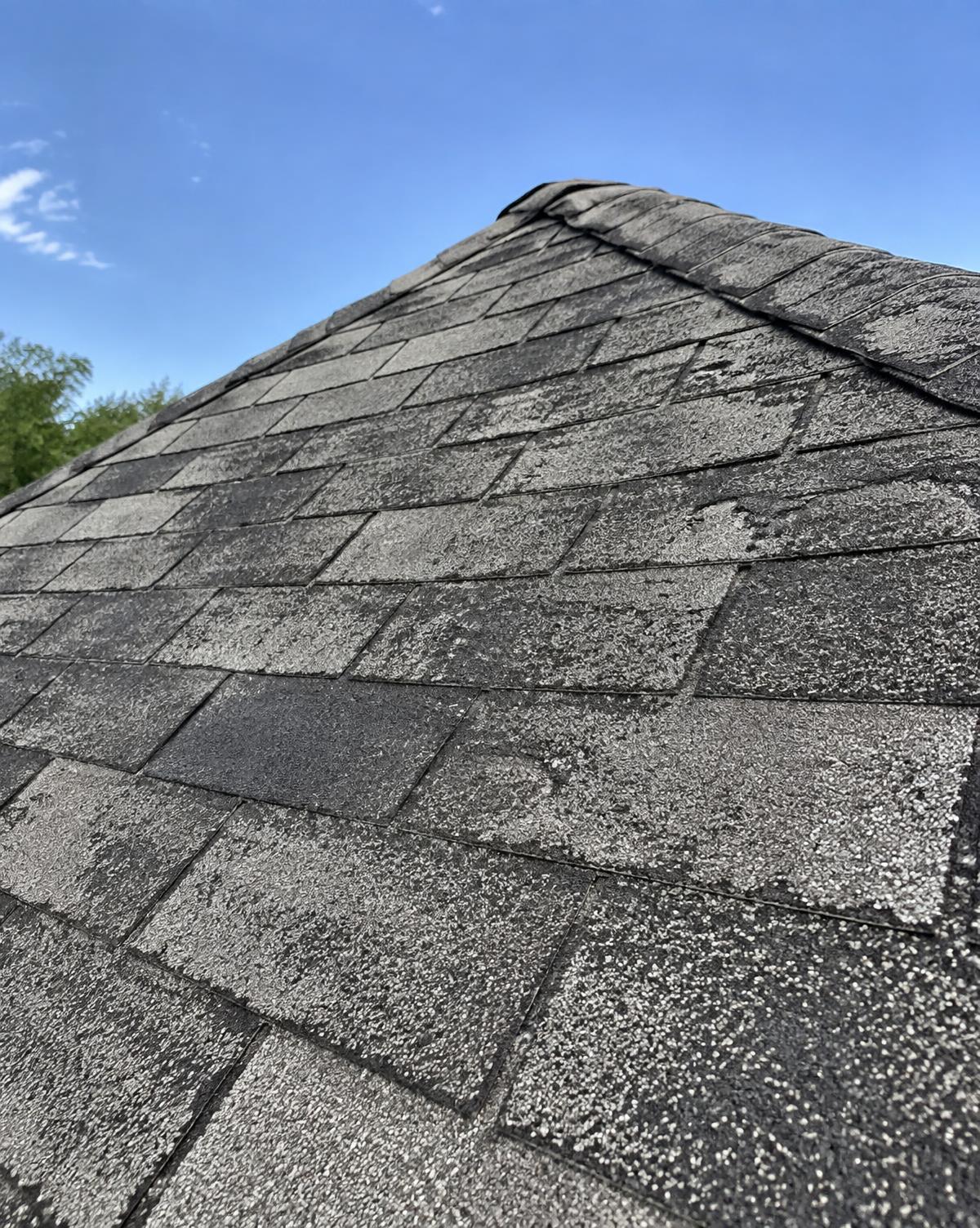
Asphalt shingles age because the oils that keep them flexible dry out. High altitude sun and hard winters speed that up. The shingles get brittle, lose granules, and start to crack long before the roof is actually done. A shingle roof coating is applied to the whole roof to help protect the shingles and slow down that wear. If your roof is worn but still lying flat and not leaking, a coating can buy you years before you need to replace it. Own an RV too? We also do RV roof coatings.
Good candidate
- Asphalt shingles
- Roof is aging but shingles are lying flat
- Shingles are drying out or losing granules
- No active leaks
Probably not
- Active leaks
- Missing or curling shingles
- Major hail damage
- Sagging roof deck
The process
- 01
Free Roof Check
We get on the roof and tell you straight whether coating makes sense.
- 02
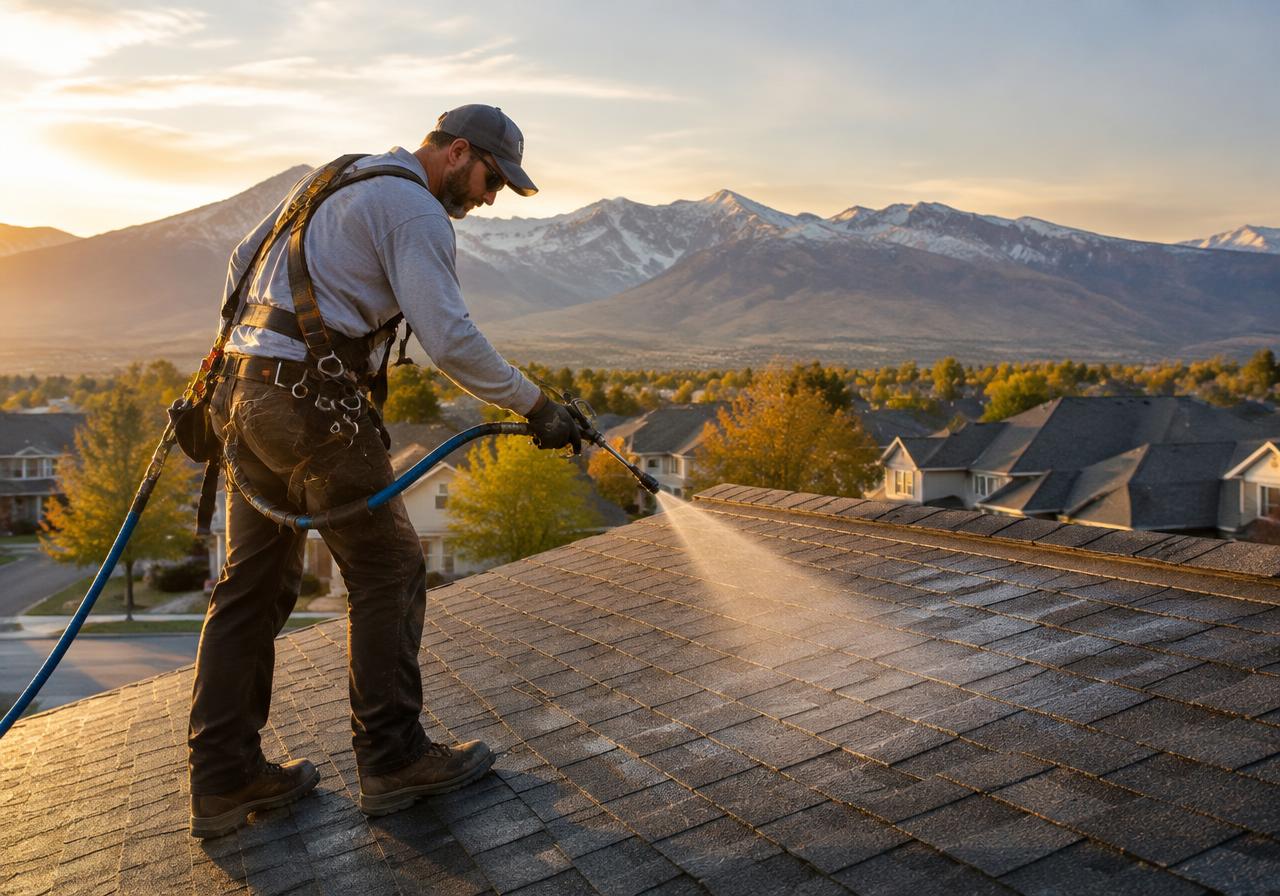
Clean & Coat
We prep and coat the shingles. Most homes are done in a day.
- 03
Protected
Your shingles are sealed against sun, snow, and freeze thaw.
Should you coat it or replace it?
Protect what you have
Roof coating
Cost
Lower upfront cost
Timeline
Typically one day
Old shingles
They stay in place
Disruption
Minimal driveway disruption
Start over
Full replacement
Cost
Much higher upfront cost
Timeline
Typically three to five days
Old shingles
Two to four tons may go to a landfill
Disruption
Dumpster, noise, and debris
Shingle roof coating guide
What a shingle roof coating does
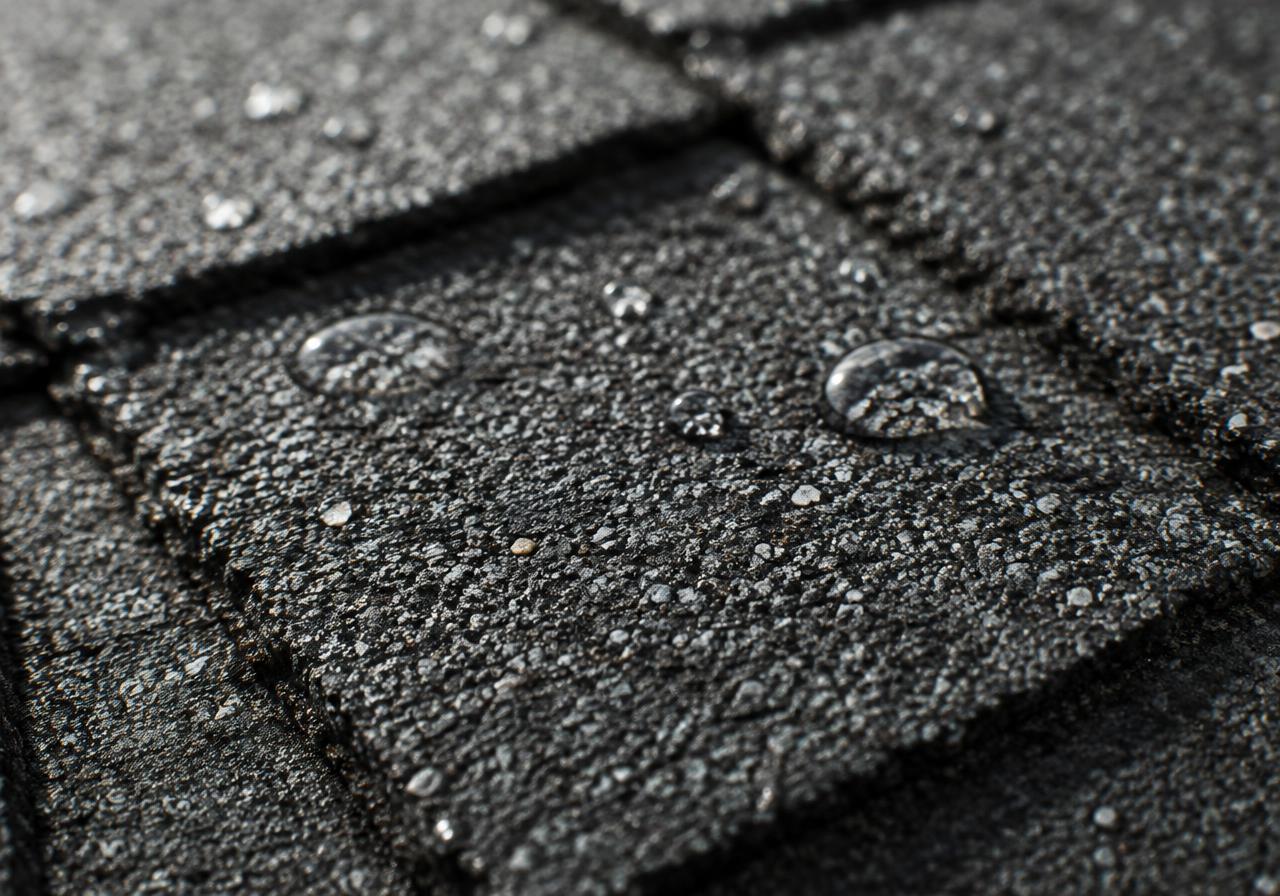
As asphalt shingles age, the sun bakes out their oils. They get brittle, lose granules, and start to curl. A residential roof coating is a liquid applied treatment that soaks into and coats the shingles, helping restore flexibility and adding a protective layer against UV and water.
It is not a replacement for a failed roof. It is a way to protect a roof that is aging but still sound, so it keeps working longer.
When coating makes sense
The best time to coat is when shingles are showing age but are still lying flat and attached. Faded color, some granule loss in the gutters, and minor surface cracking are typical signs. Roofs with widespread missing shingles, soft or sagging decking, or active leaks through the deck usually need repair or replacement first.
A quick assessment answers the question. We look at the shingles, the flashing, and the attic when possible, then tell you whether coating is a good fit.
Mountain West weather is hard on shingles
At higher elevations, UV exposure is stronger than at sea level, and it ages shingles faster. Add hail, heavy snow, ice dams, and big temperature swings between day and night, and roofs across Idaho, Utah, Montana, and Wyoming wear out quicker than the number on the shingle wrapper suggests.
Cost compared to replacement
A full tear off means new shingles, underlayment, flashing, labor, and disposal. A coating skips most of that, so it typically costs a fraction of replacement and is usually done in about a day with no dumpster in the driveway.
Insurance and warranties
Ask your contractor what warranty comes with the coating and what it covers. If your roof has storm damage, talk to your insurance company about the damage first. Coating does not replace a legitimate insurance claim.
“Most roofs don't need replacing. They need protecting.”