
Liquid Applied Weather Barrier
Skip the house wrap.
A fluid applied air and water barrier for exterior walls. Seamless, fully adhered, and sealed into every window and penetration.
What is a liquid applied weather barrier?
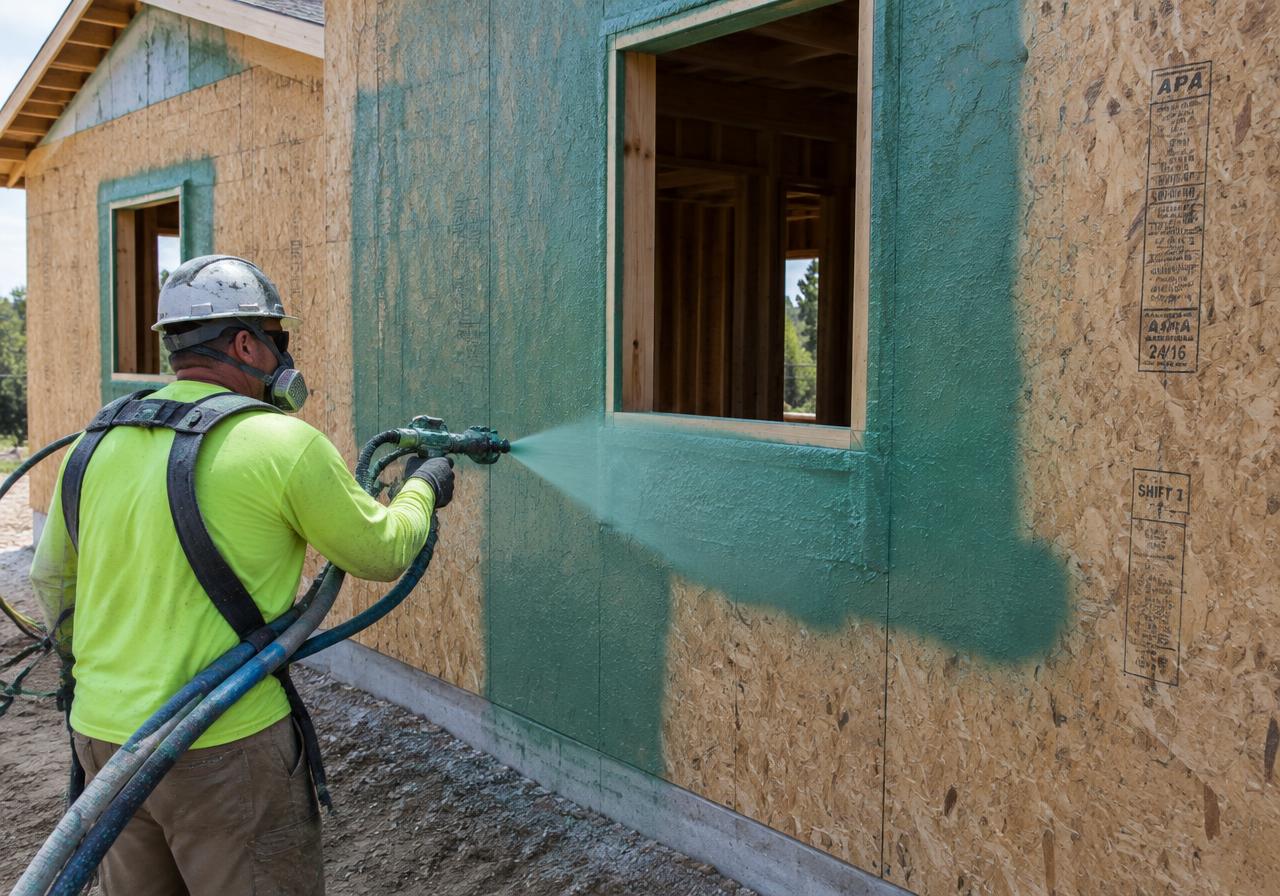
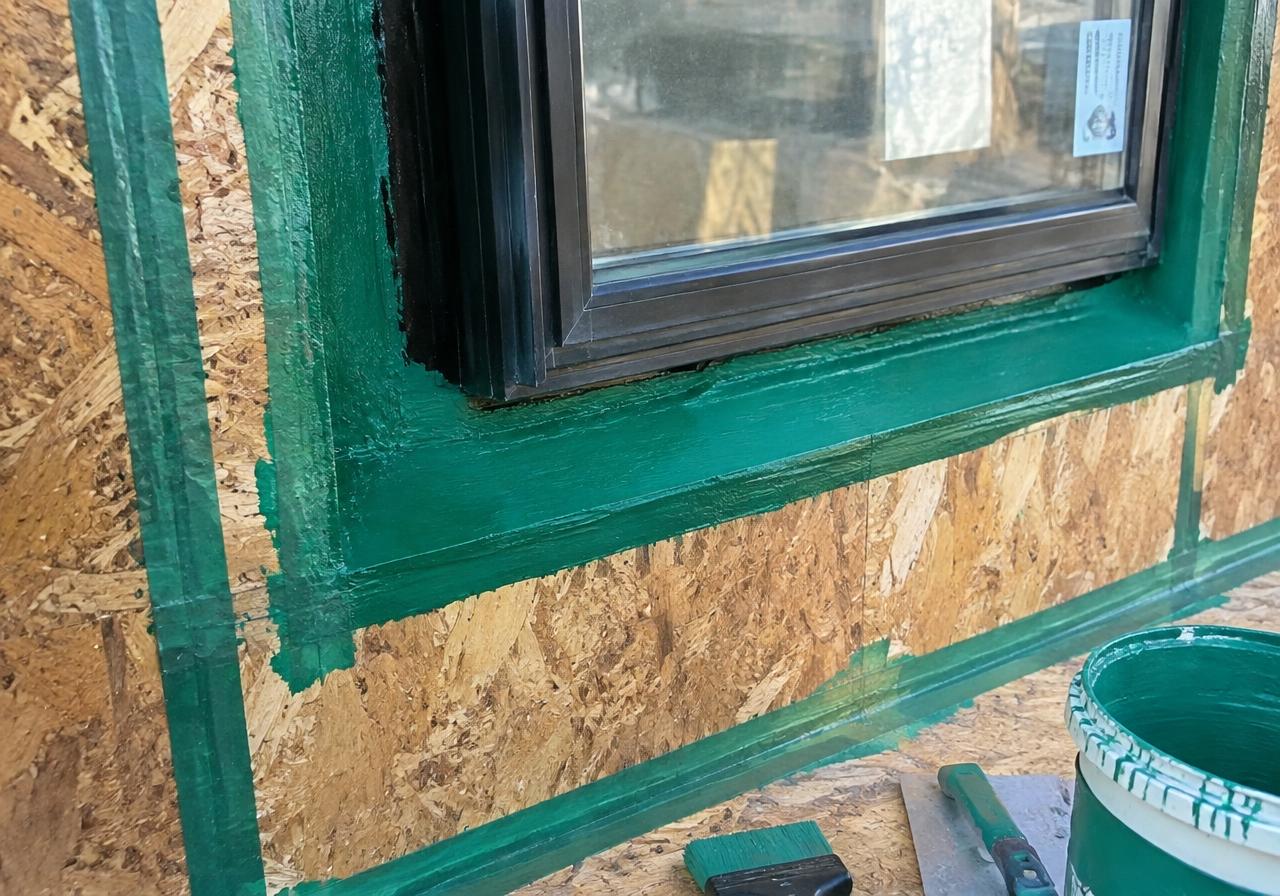
Every wall behind siding needs a weather resistive barrier to keep water and air out of the framing. Most builders use house wrap: a sheet stapled to the sheathing with taped seams. It works when it's installed perfectly, but it tears, flaps in the wind, and every staple is a hole. A liquid applied barrier is rolled or sprayed directly onto the sheathing and cures into one continuous membrane. There are no seams to tape, no fasteners through it, and it's detailed straight into window and door openings, so water has nowhere to get in. Building a shop? Pair it with a metal roof coating.
Why it beats house wrap
- No seams or tape to fail
- No staples punching holes in it
- Won't tear or blow loose before siding goes on
- Fully adhered, so air can't move behind it
- Continuous into windows, doors, and penetrations
Where we use it
- Custom homes
- Shops, garages, and ADUs
- Additions and re-siding projects
- Light commercial and multifamily
- Any new build going for a tighter envelope
The process
- 01
Plan review
We review the plans and siding type and pick the right product.
- 02
Detail
Windows, doors, corners, and penetrations get detailed first.
- 03
Apply
The barrier is rolled or sprayed across the full wall area.
- 04
Ready for siding
Once cured, it's ready for inspection and cladding.
Liquid barrier vs. house wrap
Seamless
Liquid barrier
Seams
None, seamless
Fasteners through the barrier
None
Wind damage before siding
Won't tear or blow loose
Sealing at openings and penetrations
Continuous into openings
Air movement behind the barrier
Fully adhered, none
Sheet goods
House wrap
Seams
Taped overlaps
Fasteners through the barrier
Hundreds of staples
Wind damage before siding
Can tear and flap
Sealing at openings and penetrations
Separate tape and flashing
Air movement behind the barrier
Possible if not perfectly sealed
Weather barrier guide for builders
What a liquid applied weather barrier is
A liquid applied, or fluid applied, weather barrier is sprayed or rolled onto exterior sheathing to form a continuous, seamless membrane. It sits behind the siding and keeps bulk water out of the wall while still letting water vapor escape, depending on the product chosen.
Because there are no seams, staples, or laps, there are fewer places for air and water to get through than with mechanically fastened wraps.
Air sealing and energy code
Energy codes keep tightening air leakage requirements, and many builders now blower door test every house. A continuous fluid applied barrier helps control air movement through the wall assembly and can make it easier to hit air tightness targets.
Openings, penetrations, and transitions
Most wall leaks start at windows, doors, and penetrations. Rough openings are flashed and sealed as part of the system, and transitions to the foundation and roof are detailed so water is directed out of the wall.
Scheduling on a new build
The barrier goes on after sheathing and before windows and siding. Application is fast, and there is no wrap to tear in the wind or get damaged sitting exposed while the schedule slips. Temperature and weather limits apply, so we coordinate with your superintendent.
Working with builders and architects
We work with general contractors, custom builders, and architects on residential and light commercial projects. Send plans and we will review the wall assembly and provide a scope and price.
How it sits in the wall
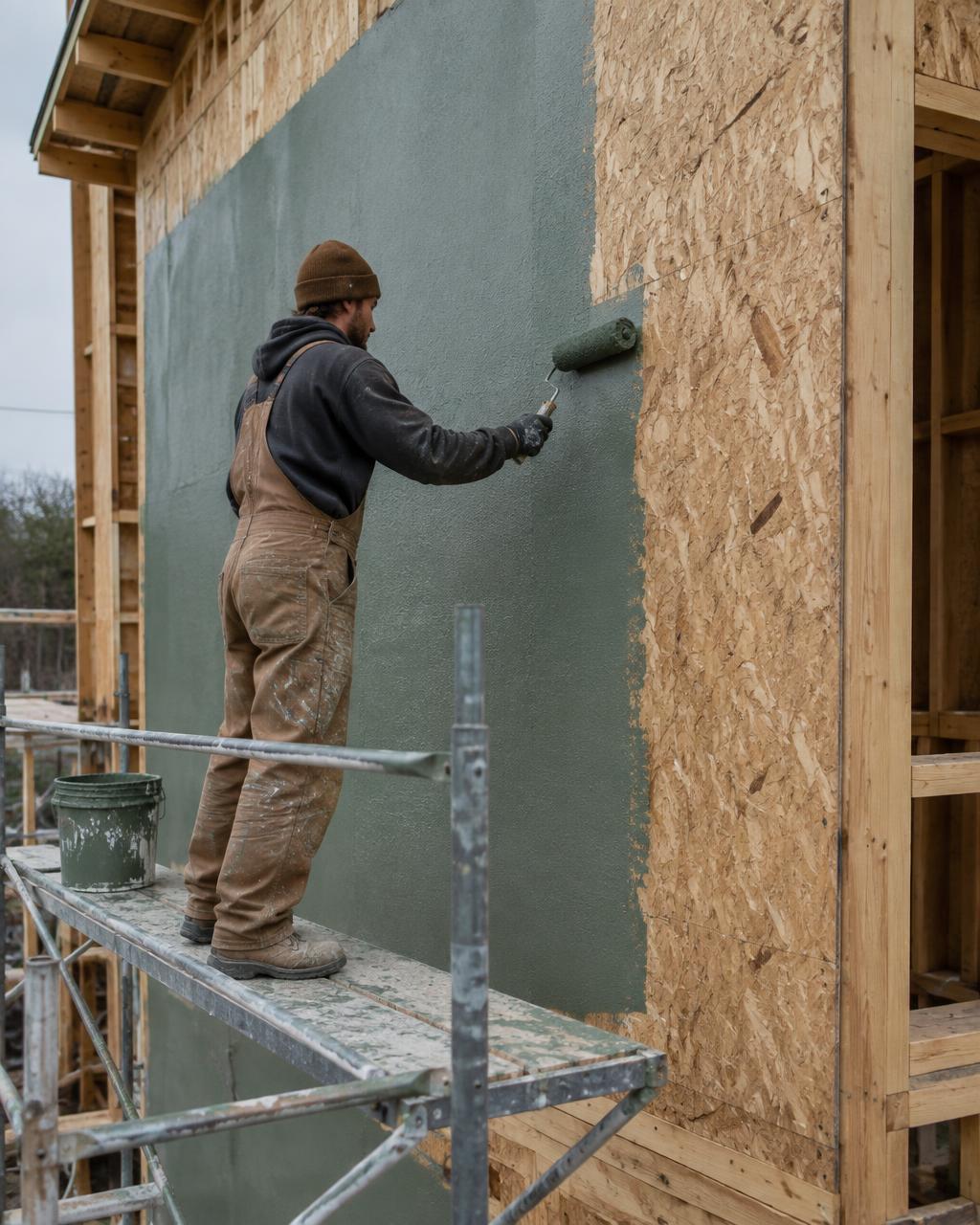
“The siding is what people see. The barrier behind it is what keeps the house dry.”